

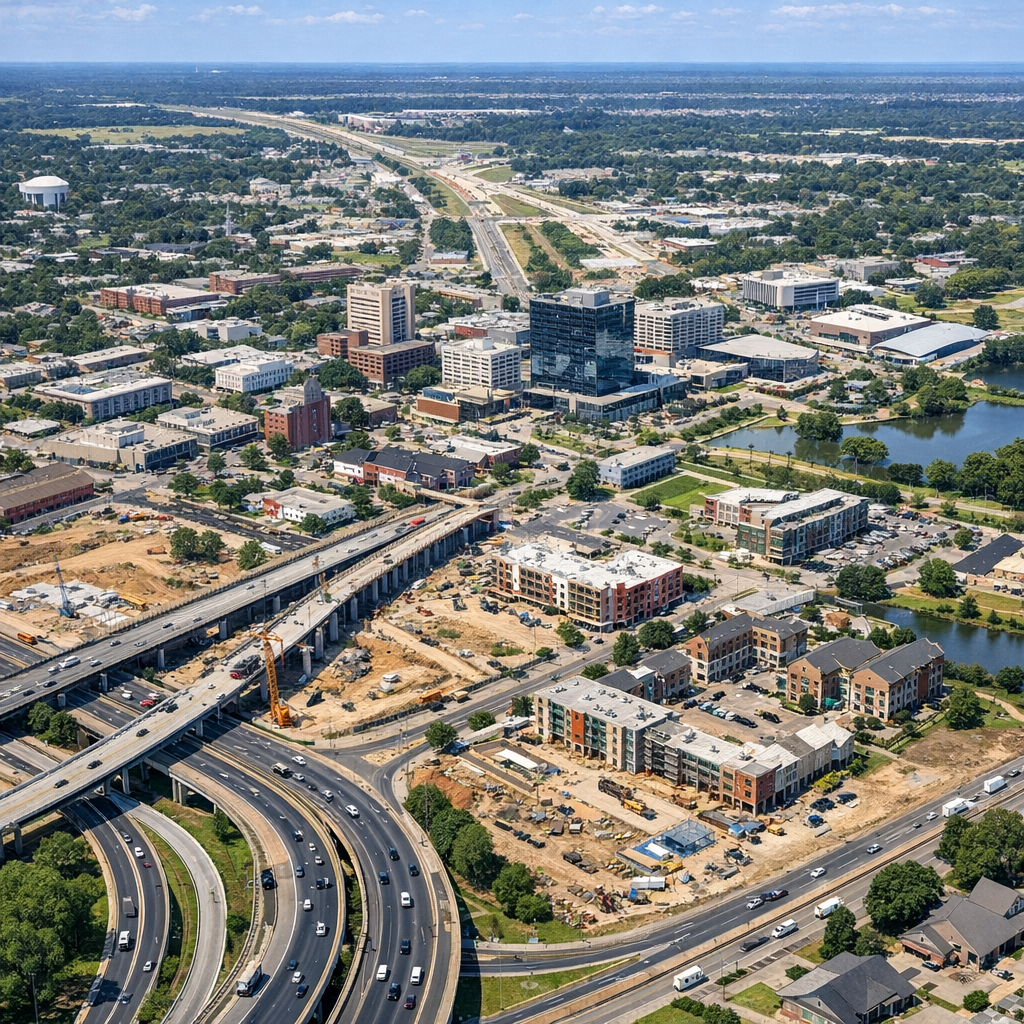
National economic policies play a pivotal role in shaping the growth and development of local communities, including Lafayette, Louisiana. Federal initiatives, such as the American Rescue Plan Act (ARPA), have provided substantial funding to support local projects and infrastructure improvements.
American Rescue Plan Act (ARPA) Funding
Since 2021, Lafayette Consolidated Government received a total allocation of $85,726,551 in State and Local Fiscal Recovery Funds (SLFRF) through ARPA. This funding is designated for various sectors:
- Transportation and Drainage Infrastructure: Investments aimed at enhancing roadways and drainage systems to improve public safety and accommodate growth.
- Public Safety and Fire Protection: Allocations to bolster emergency response capabilities and ensure community safety.
- Public Buildings and Parks: Funds directed towards the maintenance and development of public facilities and recreational areas.
- Economic Development: Initiatives including broadband expansion and growth planning to stimulate local business and attract new industries.
Notably, over 80% of the combined funding is being invested in hard infrastructure improvements, reflecting a commitment to long-term community development. [Source: Lafayette Consolidated Government]
University of Louisiana at Lafayette’s Economic Impact
The University of Louisiana at Lafayette (UL Lafayette) significantly contributes to the local and state economy. A recent study highlighted the university’s impact:
- Statewide Economic Impact: UL Lafayette had a $2.7 billion impact on Louisiana’s economy for the fiscal year 2021-2022.
- Job Support: The university’s activities support over 34,600 jobs statewide, accounting for one out of every 78 jobs in the state.
- Regional Influence: In the Acadiana region, UL Lafayette’s $1.7 billion economic impact supports more than 25,100 jobs, representing one out of every 15 jobs in the area.
These figures underscore the university’s role as a vital economic engine, driving growth and providing employment opportunities within the community. [Source: University of Louisiana at Lafayette]
Infrastructure Development and Economic Growth
Infrastructure projects, often funded through federal and state initiatives, are crucial for economic development. The completion of the I-49 Lafayette Connector, a 5.5-mile extension of I-49 from I-10 to just south of the Lafayette Regional Airport, is projected to have significant economic benefits:
- Job Creation: By 2044, completing the Lafayette Connector and other segments of I-49 South is expected to create more than 6,000 jobs statewide.
- Gross Domestic Product (GDP) Contribution: Over a 21-year period following the construction of the Lafayette Connector, the additional GDP contribution to the state of Louisiana is estimated to be more than $2.3 billion.
These projections highlight the importance of infrastructure investments in fostering long-term economic growth and enhancing connectivity within the region. [Source: One Acadiana]
In conclusion, national economic policies and federal funding initiatives have a profound impact on Lafayette’s development. Through strategic investments in infrastructure, education, and public services, these policies contribute to the city’s growth, job creation, and overall economic vitality.