

By Logan Vincent
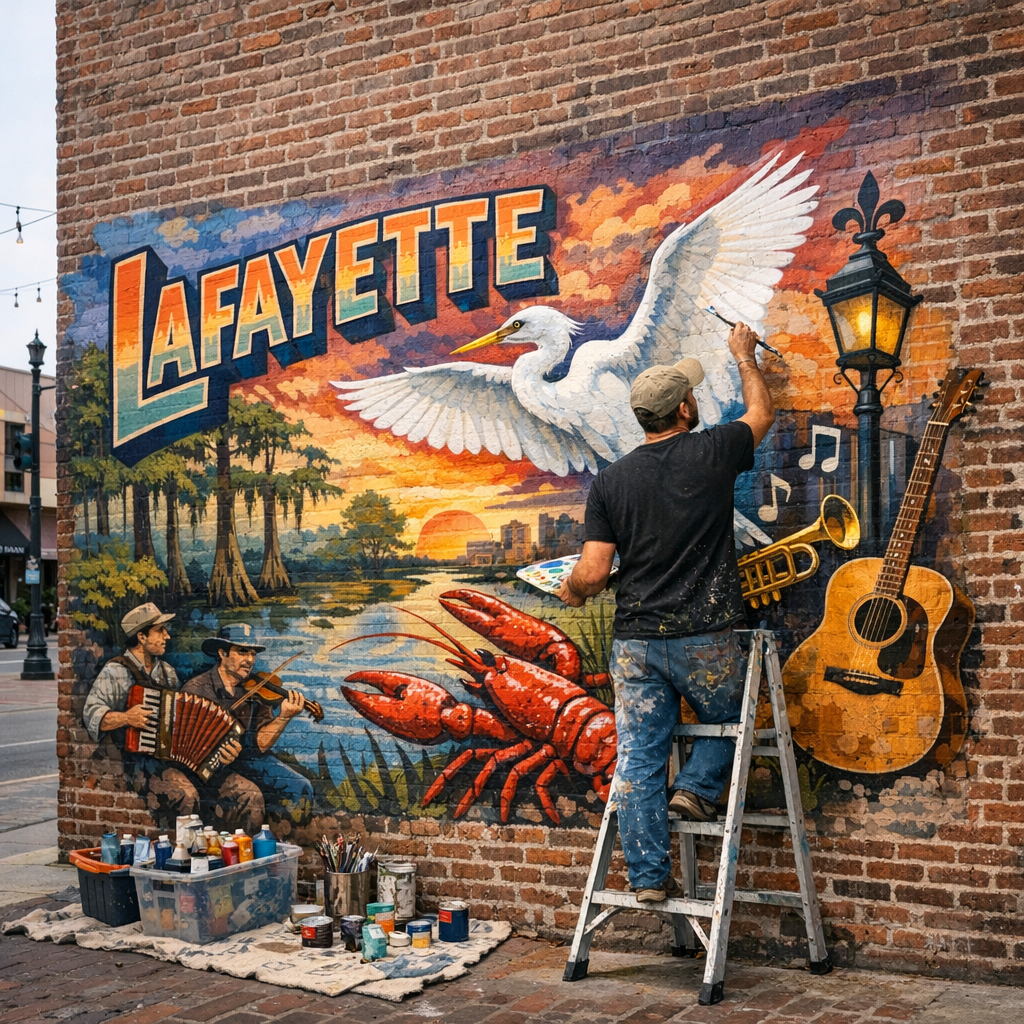
In Lafayette, we often talk about food, music, and festivals—that’s our outward identity. But the stories we tell and the murals that color our streets have an equal role in defining who we are. What we set in murals and what we capture in our elders’ voices aren’t just aesthetically pleasing—they anchor us.
The Power of Oral Histories
Places like Maison Créole de Freetown are helping collect the oral narratives of community members—especially elders—to ensure local stories aren’t lost, forgotten, or left out of history. These first-person recollections help us remember what has changed, yes, but also what has stayed the same: resilience, hope, small kindnesses.
Oral history projects—from documenting the Latino immigrant experience through “La Nueva Frontera” to preserving the African American heritage of neighborhoods—do more than quote the past. They give people a voice and remind us of the diverse expressions that have shaped Lafayette over generations.
Public Art as Place-Maker
It’s no accident that downtown streets feel more alive where murals bloom and sculptures stand. A recent 5,000 square-foot mural on the side of the Children’s Museum of Acadiana is part of Lafayette Public Art Network’s early projects—proof that public art turns blank walls into bridges between artist and passerby.
The city’s commitment—for example, via its Public Art Committee—not only seeks visual beauty but also aims to reflect the cultural and ethnic diversity of our community. When public art is visible everywhere, we understand that the city belongs to everyone.
How They Work Together
Both oral histories and public art: they tell stories. Art can show what words can’t—vibrancy, identity, belonging. History can give art deeper roots. We walk past a mural, then recall that it represents someone’s memory, someone’s struggle, or someone’s dream. Maybe it’s the story of immigrants making a home here, or a culture preserved over generations. Oral accounts inform art; art celebrates oral accounts.
What We Can Do Now
- Support local history centers and archives—volunteer, donate, or just visit. These are the places preserving Voices of Lafayette beyond just names on signs.
- Encourage artists and donors to collaborate with neighborhoods—so murals and sculptures represent the citizens who live around them.
- Attend public art unveiling events and oral history gatherings—your presence affirms these stories matter.
- Share your story. If you or someone you know has memories of life in Lafayette—spoken languages, festivals, foodways, family—record them. Submit them to local archives or community projects.
Lafayette’s identity isn’t fixed. It’s built every day—in spoken word, painted wall, memory, and moment. By listening and creating, we strengthen the threads that bind us—past, present, future. And that’s worth more than beauty alone.