

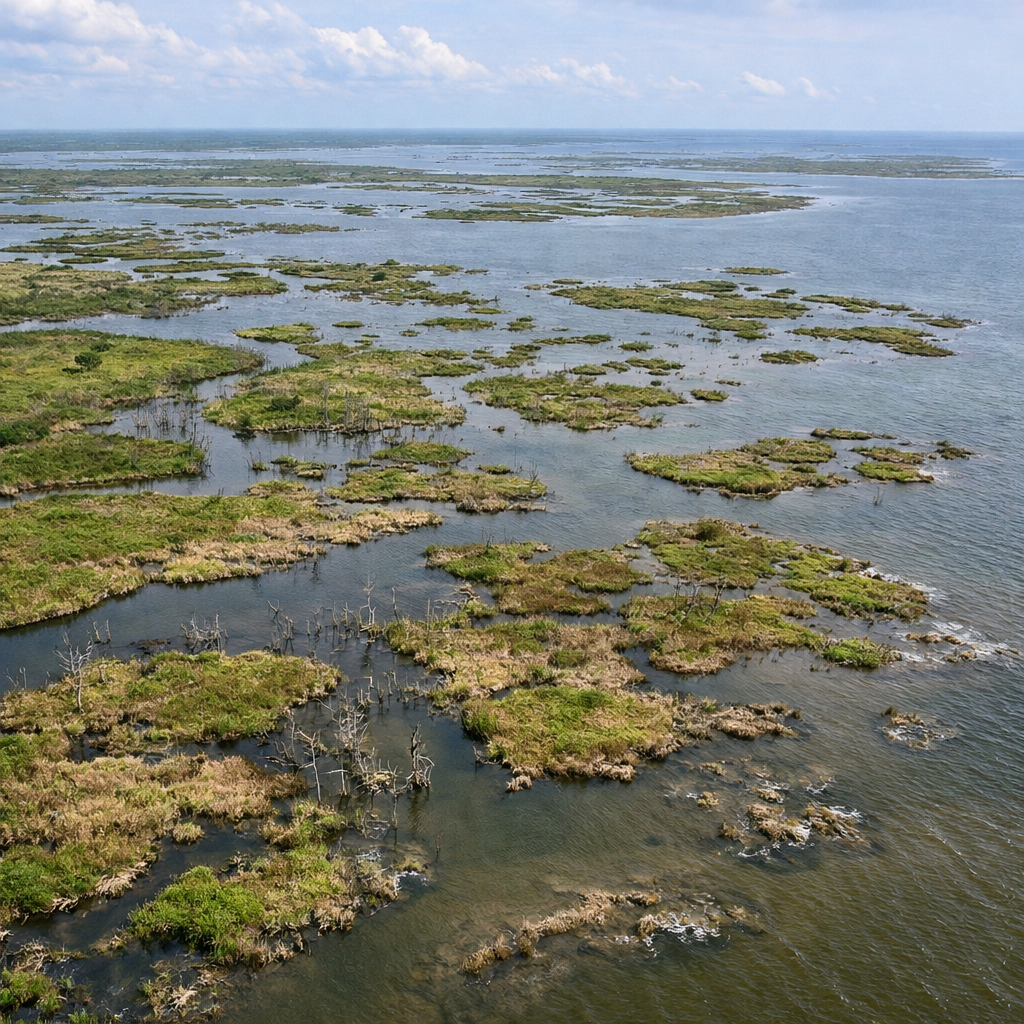
As global climate patterns continue to evolve, coastal regions worldwide are experiencing significant transformations. Louisiana’s coastline, known for its rich cultural heritage and economic importance, is particularly vulnerable to these changes.
Rising Sea Levels and Land Loss
One of the most pressing issues is the rapid land loss along Louisiana’s coast. Studies indicate that the state is losing land at an alarming rate, with some estimates suggesting the disappearance of areas equivalent to 30 football fields daily. This phenomenon is attributed to a combination of factors, including rising sea levels, subsidence, and human activities such as levee construction and canal dredging. The loss of wetlands not only threatens local ecosystems but also diminishes natural storm buffers, increasing the risk of flooding in inland areas.
Economic and Environmental Impacts
The encroaching waters pose significant challenges to industries that are the backbone of Louisiana’s economy. The seafood industry, for instance, faces disruptions as habitats for oysters, shrimp, and fish are altered or destroyed. Additionally, infrastructure such as ports and energy facilities are at risk, potentially affecting both local and national economies.
Community Resilience and Adaptation
In response to these challenges, Louisiana has been proactive in developing strategies to mitigate the impacts of climate change. Initiatives include coastal restoration projects aimed at rebuilding wetlands, implementing stricter regulations on industrial activities to prevent further environmental degradation, and investing in resilient infrastructure to withstand future climatic events.
Understanding the global context of climate change is crucial for local communities. By recognizing the interconnectedness of global events and local impacts, Louisiana can continue to develop informed policies and practices that safeguard its coastal regions for future generations.