

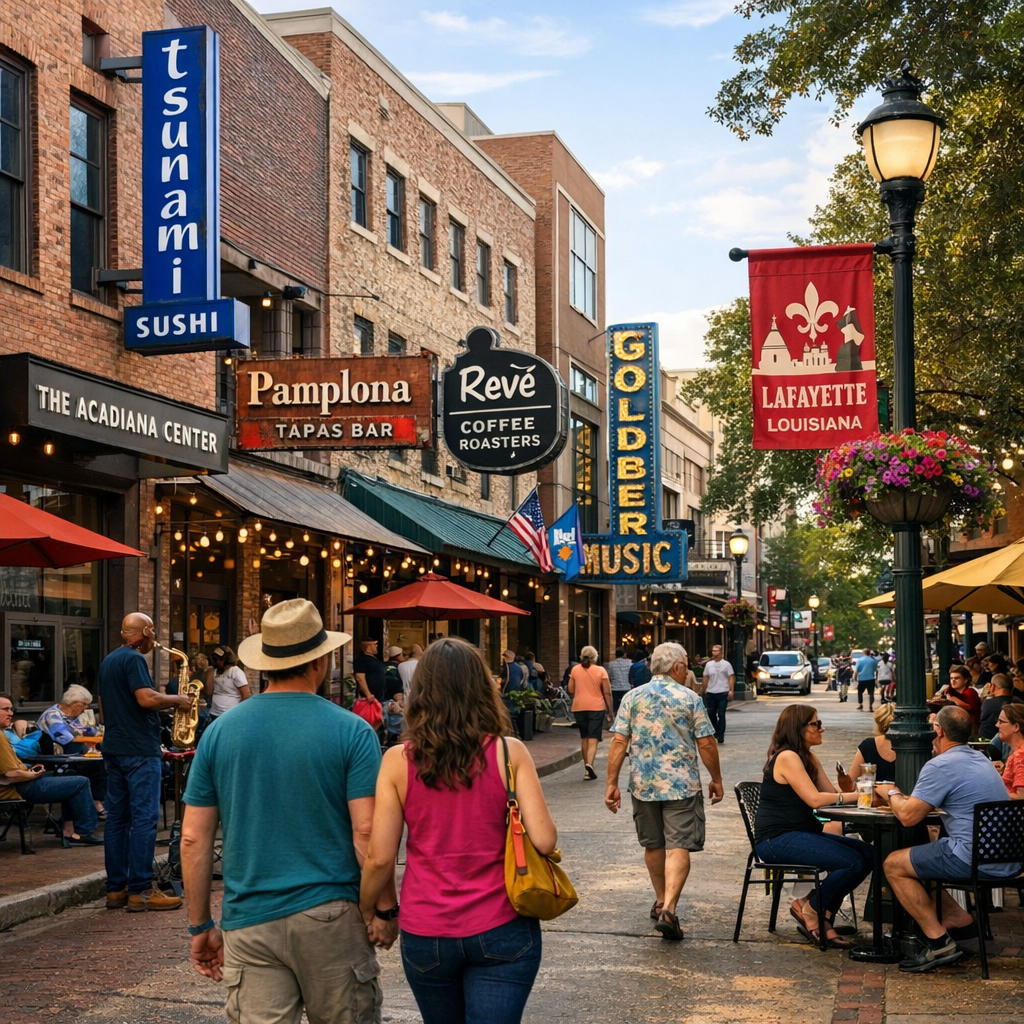
Lafayette, Louisiana, continues to showcase a dynamic and resilient business environment, marked by significant developments across various sectors. This article delves into the current economic trends shaping our community, emphasizing growth areas and the support systems in place for local businesses and entrepreneurs.
Construction Industry Growth
The construction sector in Lafayette has experienced notable expansion. In 2023, construction activity reached over $406 million, reflecting a surge in both residential and commercial projects. This growth is driven by innovative residential developments and substantial investments from local government, the University of Louisiana at Lafayette, and private enterprises. Such developments not only enhance the city’s infrastructure but also create numerous job opportunities for residents.
Retail and Restaurant Market Transformations
Lafayette’s retail and restaurant landscapes are undergoing significant transformations. Major national brands have scaled back, making way for local businesses to thrive. Recent trends indicate a shift towards redevelopment projects over new constructions, as local establishments adapt to post-pandemic challenges. While the restaurant scene is vibrant, with more openings than closures, concerns about market saturation and profitability persist.
Support for Entrepreneurs and Small Businesses
The city fosters a supportive ecosystem for entrepreneurs and small businesses. The Opportunity Machine (OM), an initiative by the Lafayette Economic Development Authority (LEDA), has been instrumental in nurturing startups. Since its inception in 2009, OM has trained over 1,000 entrepreneurs annually, with clients securing more than $32 million in investment funds. This commitment to entrepreneurship underscores Lafayette’s dedication to economic diversity and regional prosperity.
Economic Development Initiatives
City officials have unveiled the “Evangeline Corridor Forward” plan, a comprehensive economic development strategy aimed at revitalizing the Evangeline Corridor. The initiative is projected to generate $317 million in real estate investment, create over 2,000 construction jobs, and nearly 900 permanent positions. Additionally, it is expected to bring in over $46 million in annual retail and business revenue, contributing significantly to the local economy.
Conclusion
Lafayette’s business landscape is characterized by growth, adaptability, and a strong support network for entrepreneurs. The city’s proactive approach to economic development, coupled with the resilience of local businesses, positions Lafayette as a thriving hub for commerce and innovation.