

As global climate patterns shift, coastal regions worldwide are experiencing significant changes, and Louisiana’s coastline is no exception. The interplay between rising sea levels, increased storm activity, and human interventions has led to notable transformations in our local environment.
Rising Sea Levels and Land Loss
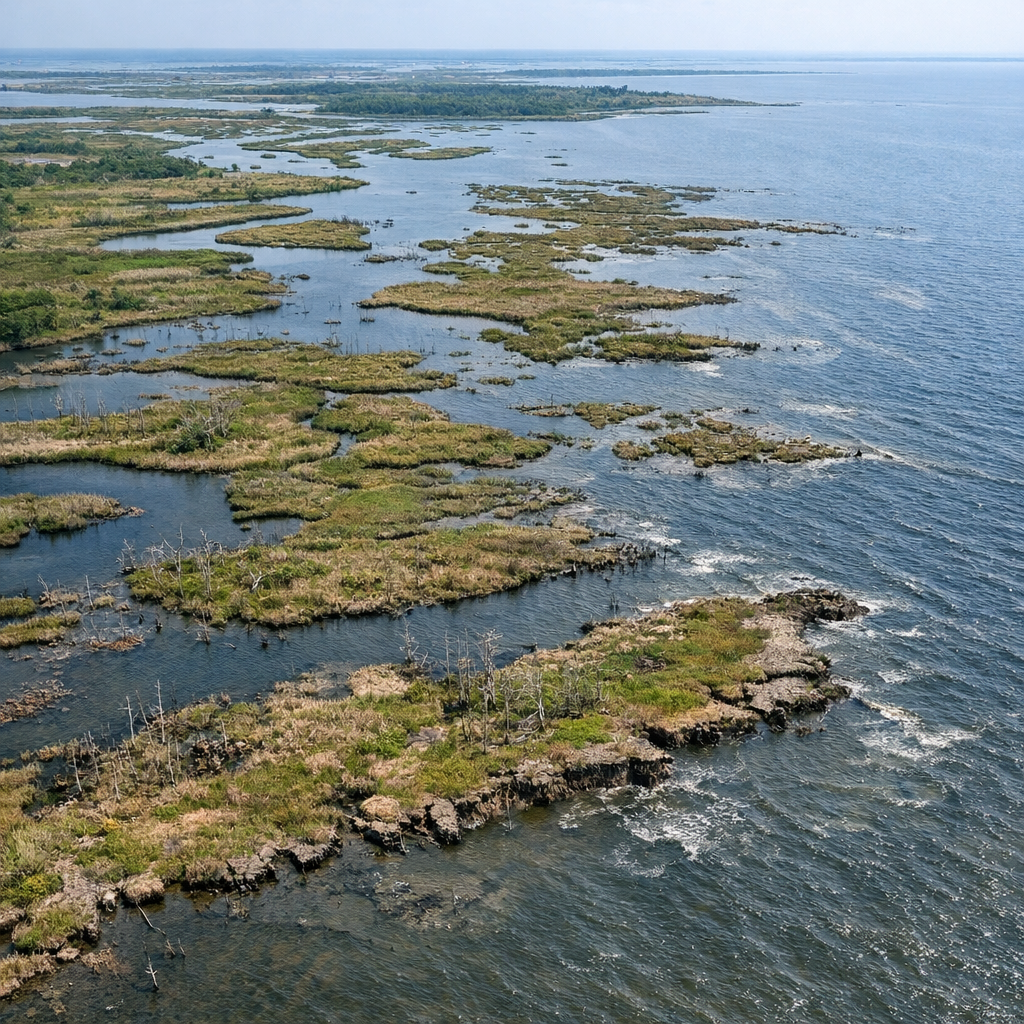
Louisiana’s coast is among the fastest-disappearing areas globally. Historically, the Mississippi River’s spring floods deposited sediment, fostering marsh growth. However, the construction of artificial levees has disrupted this natural process, preventing sediment deposition and leading to land erosion. Additionally, canals dug for the oil and gas industry have facilitated saltwater intrusion, further degrading freshwater marshes. As a result, the state loses an area equivalent to 30 football fields daily. Without intervention, coastal communities face continued displacement and economic challenges. [Source: Louisiana]
Increased Storm Activity
Climate change has intensified the frequency and severity of tropical storms and hurricanes. Louisiana has experienced significant events, such as Hurricane Ida in 2021, which caused widespread devastation with 150 mph sustained winds. These storms not only threaten lives and property but also disrupt local economies and ecosystems. [Source: Louisiana Office of State Climatology]
Environmental and Economic Impacts
The combination of rising sea levels and intensified storms has led to increased flooding, affecting infrastructure and natural habitats. Coastal wetlands, vital for fisheries, are particularly vulnerable. The loss of these wetlands adversely impacts the fishing industry, a cornerstone of Louisiana’s economy. Moreover, industrial activities, such as the construction of liquefied natural gas terminals, have raised concerns about environmental degradation. For instance, dredging operations have led to sediment spills, affecting oyster populations and the livelihoods of local fishermen. [Source: WWNO]
Mitigation and Adaptation Efforts
Recognizing these challenges, Louisiana has initiated several measures to mitigate and adapt to the changing climate. Efforts include restoring natural flood patterns by modifying levee systems, implementing coastal restoration projects, and developing comprehensive climate action plans. These initiatives aim to preserve the state’s unique ecosystems and protect the communities that depend on them. [Source: NOAA Climate.gov]
In conclusion, while global climate trends pose significant challenges to Louisiana’s coastal regions, proactive measures and community engagement can help mitigate these impacts and ensure a sustainable future for our coastal communities.